What do you think about hatha yoga? Do you consider it as merely physical and therapeutic one or it involves gradual shifting from gross to subtle or hatha yoga is preparation for higher consciousness? You come to join hatha yoga teacher training course in Rishikesh to become a certified yoga teacher or refresh the vibes or some other personal reason. Hatha yoga can’t be expressed in few words or lines because it needs to be lived process to be experienced.
Hatha yoga is science as its theoretical philosophy can be verified through direct practice. For example, advanced practitioners sometimes report being able to influence sensations like body warmth through breath control, focus and regulated energy practices. There are also accounts of yogis in Himalayan regions living in extreme cold with minimal clothing, relying on long-term adaptation, intense discipline and sustained practice to endure harsh conditions.
Hatha yoga is science of inner purification by transcending your physical and mental limitations. Without ventilation, a room will remain dead no matter you decorate it with precious objects. Same happens when you enroll for hatha yoga teacher training course. It is preparatory ground for higher practices like raj yoga and kundalini yoga. What “yama” and “niyama” are to ashtanga yoga, shatkarma (six purification techniques) is to hatha yoga. You use your body a vehicle to explore the path of illumination.
REMOVE BLOCKAGES
If a river’s path is filled with many blockages, the water still moves, but its flow becomes slow and irregular. When those obstructions are cleared, the same water begins to move smoothly with rhythm and ease, following its natural course. In the same way, hatha yoga works on removing inner tensions and energetic blockages so that the system can function more freely. As these subtle obstructions are released, energy is believed to flow with greater balance and steadiness, supporting a stable body and a calm mind.
A forest tree grows naturally because it stays in tune with the patterns of existence. It adjusts to its environment where sunlight is abundant, it flourishes more and bears richer fruit. In a similar way, hatha yoga is about returning the human system (body, breath, and mind) to its natural alignment. By restoring balance and removing inner disturbances, it helps us reconnect with a more harmonious rhythm of living, bringing greater clarity, stability and meaning to life.
Hatha yoga helps release suppressed emotions and disturbing thoughts by bringing balance to the body, breath and mind. Stress, fear, and emotional pain often remain stored within the body as tension and restlessness. Through postures, conscious breathing, and awareness, the body gradually relaxes, the breath becomes calm, and the mind settles naturally. As inner balance deepens, emotional heaviness and scattered thoughts begin to loosen and dissolve, creating a sense of clarity and inner peace.
RISING RECOGNITION
The relevance of Hatha yoga is timeless. It is not limited by age, culture, profession, or social background, because it works with the fundamental aspects of human life i.e. body, breath, mind, and awareness. Its practices remain meaningful for anyone seeking balance, clarity, health and inner growth. For any kind of work (mental, physical, or both), a healthy body and a productive mind are essential. Hatha yoga helps cultivate both naturally through regular practice and inner stability into everyday life.
People from all over the world are turning toward hatha yoga techniques like never before, seeking not only physical well-being but also mental clarity, emotional balance and a deeper sense of inner connection in an increasingly fast-paced world. Hatha yoga schools are emerging across the world, reflecting the growing interest in holistic well-being and inner balance. Yoga Alliance, USA certified teachers are now teaching in studios, wellness centres and retreat place.
STEADY STATE
Asana is stable position of body free from stress, anxiety and inconvenience. Its purpose is to prepare you physically before turning inwards. Many elementary asanas of hatha yoga are mostly inspired by the balance, rhythm and stability found in nature. Practices such as surya namaskar, palm tree, cat pose, camel pose reflect this connection. Through these postures, yoga encourages the body to cultivate the same steadiness, harmony and natural alignment that exists throughout creation.
Hatha yoga prepares body for four weeks of yoga teacher training course. It synchronizes your breath awareness with effortless body’s movement while attaining final position. There are selected asanas in hatha yoga for maintaining coordination among different organs of body. It helps in the stirring inherent energy in body which remained untapped. Hatha yoga asanas remove blockages and knots from gross body. Once you start practicing hatha yoga asanas, it will become inseparable part of your life.
Vajrasana asanas: The Sanskrt word Vajra means thunderbolt that implies inner strength and stability and asana means stable pose. Under this asana, you have to sit on the floor in which stoop and sit back on your heels with upright back. Standing asana: Some common standing asanas are tadaasana, vrikshasana and trikonaasana to bring stability and alignment with nature. As name suggests, these asanas are practiced on feet to build balance.
Surya namasakra: Surya means sun and namaskar implies salutation. There are 12 practices under surya namaskar mainly practiced to seek blessings from that source which illumines the whole earth. Padmasana group: Padma means lotus and asana signifies for pose. These are sitting meditative asanas which helps in disconnecting from the outer world and turn your awareness inwards.
Backward-bending asanas: It means simple backbends where spine is gently arched backward without stress or strain in other part of the body. It helps in building strength to the spine. Forward-bending asana: The body slightly bends forward from the spine or hips, so it is called forward-bending asanas. It gives relaxation to the spine and legs by removing inner blockages.
Spinal-twisting asanas: As the name suggests, spinal-twisting asanas are poses where spine is gently rotated either to the left or right. It helps in generating a sense of lightness and alignment. Inverted asanas: In inverted asanas, head is positioned below and legs up. It helps improving blood circulation, and also supports nervous system. The purpose of inverted asanas is to control the gravitational pull of the earth. Balancing asanas: The perfect balance of the body on one legs to improve focus and stability of the body. It helps in bringing coordination between mind, body and awareness.
Yogic Cleansing: Just as corn is cleaned by the wind, removing husk and impurities, the mind and body are purified through Shatkarma practices. The Sanskrit word “Shatkarma” means six purification practices. Its main components are neti, dhauti, nauli, basti, trataka and kapalbhati. If you are yoga beginner, it is advisable to practice under competent yoga trainer. Corn is cleansed with the wind, and the mind & body with shatkarma in hatha yoga training.
Some yogic scholars believe that six-purification techniques also remove three ayurvedic “doshas” ---wind, phlegm and bile. It eliminates all the toxins from body and also removes anxiety and overstrains from the mind. Asanas and shatkarmas are pre-conditions before plunging in pranayama, dharana and dhyana practices.
Jal neti: Jal means water and neti signifies cleansing by using lukewarm salted water through the nasal passages. This hatha yoga purification practice removes mucus and also clear dust and blockages.
Sutra neti: Sutra means thread which is passed through one nostril and comes out through the mouth. It needs more practice to sustenances hassle-free breathing and also improves air-flow.·
Kapal bhati: The Sanskrit word “kapal” means skull and bhati means hammer. It involves rapid forceful exhalations. You focus only on the exhalations while inhalations happen on its own. ·
Dhauti: Dhauti means inner cleansing by traditional cleaning of stomach, food pipe and other internal organs where air and food moves. It helps in removing stubborn impurities and prepares you for inward exploration.·
Nauli: Nau is Hindi word which means boat and “li” means to move or churn. It involves abdominal massage by wave-like motion of the abdominal muscles gently while holding the breath.
Tratak: It means intense gazing on a point or bindu or any object without blinking eyes. It helps in improving focus and attention and also control flow excessive thoughts that is barrier to meditation.
BREATH & MIND
Pranayama in hatha yoga teachers training course means “expansion of vital energy (prana)”. More than incoming and outgoing breath, it focuses more on the points (internal & external) where breath stops naturally. When breath stops, thought also stops simultaneously because it’s the power of the breath which gives energy to all thoughts. Hatha yoga believes that by controlling your breath you can control your mind. This is the essence of pranayama techniques under hatha yoga teachers training course.
Nadi-shodhan pranayama: Nadi means subtle channels of energy and shodhan signifies purification or purging. It is also known as alternate nostril breathing where you inhale from one nostril and exhale from the other.
Bhastrika pranayama: Commonly known as bellows breathing where one is trained to breath strong and rapid inhalations and exhalation from nostrils only. It expands the energy level and also removes blockages in nostril path.
Brahmari pranayama: It is also known as bee breath because humming sound of bee comes during exhalation. This is excellent breathing technique to improve nervous system and getting relief from stress and anxiety.
Sheetali & Sheetkari pranayama: Both sheetali and sheetkari means cooling and calming breath mainly practice in summer time to beat the heat in yogic way. It calms the agitated nervous system.
Ujjayi pranayama: Ujjayi is a Sanskrit word which means victorious. Breathing is practiced gently through the nose with a slight contraction in the throat. It helps in controlling the mind by improving concentration.
Surya bhedi pranayama: Bhedi mean piercing. So, surya bhedi pranayama means piercing the sun breath where you take-in breath through the right nostril and exhale through the left nostril.
SUBTLE PRACTICES
Although Mahatma Buddha didn’t practice hatha yoga in systematized form, many traditional statues and artistic depictions show him seated in deep meditation with various hand gestures (mudras) and bodily steadiness that resembles yogic principles. These representations reflect states of inner stillness and awareness to systematized energy for higher purposes. Bandha and mudras are also a part of Vijnanabhairava Tantra’s 112 meditation techniques. The purpose of these esoteric techniques is to preserve vital energy and let it flow in chakras and nadis without interruption.
Jalandhar Bandha: Jalandhar means throat or net and bandha signifies lock or seal. Collectively, it is known as throat lock. Traditionally, it is performed to control the flow of vital energy.
Uddiyana Bandha: Uddiyana means to rise up or float upward and bandha signifies lock or seal. This is also known as upward flying lock or abdominal lock.
Mool Bandha: Mool is a Hindi word that means root or base. And, bandha signifies lock or seal. The root lock or mool bandha direct and conserve the vital energy.
Maha Bandha: Maha means great and bandha signifies lock or seal. It combines all these bandhas together i.e. Jalandhar bandha, uddiyana bandha and mool bandha.
Jnana mudra: Jnana stands for higher knowledge or wisdom and mudra means gesture or seal. It is most common mudra used in many meditation techniques.
Chin mudra: Chin means consciousness and mudra signifies gesture or seal. Chin mudra commonly practiced for expanding inner awareness.
Yoni mudra: Yoni is a Hindi word used for womb, source or origin and mudra means gesture. It is aesthetic hand gesture used for stilling the talkative mind.
Shambhavi mudra: Shambhavi means eyebrow center gazing where one directly gaze at the inner space between the eyebrows. This space is known as third eye.
Bhairava mudra: Bhairava is terrifying or fierce form of Shiva. It is mainly practice while sitting in a meditative posture to go beyond fearful and dualistic world.
Higher practices like kundalini yoga is not possible without holistic purification at both inner and outer levels. Hatha Yoga is proper yogic way for anyone seeking better physical health, mental balance, or a disciplined spiritual life. However, it should not be viewed merely as physical exercise. Without proper guidance, regular practice, and an understanding of its deeper purpose, its transformative potential remains limited.


Frequently Asked Questions About Yoga
Yoga is the invisible connection between your outer world and your inner self. Your thoughts, feelings and reactions to external events shape your inner world.

What is Pranayama?
Everyone breathes, just as everyone has legs. But having legs is not the same as walking, and breathing is not the same as practicing pranayama.

What is AUM?
Sound is present everywhere: in the rhythm of your breath and heartbeat; and in the movement of the sea, air and earth.
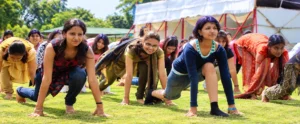
Asanas for Diabetes
Regular asana practice can be a simple, accessible and practical way in managing diabetes. It requires no special place; you can practice them at home