
There are two aspects: the ‘observer’ and the ‘observed’ in meditation. In many practices, the mind is first trained to become ‘steady’ by focussing on an external object like a candle flame or dot on wall. It gradually prepares the mind for silence and inner awareness. When the object of meditation is very close to you, can’t be seen by the eyes, but can always be felt through its continuous movement, it can also become a doorway to transformation.
When your own breath becomes the focus of mind, it is called breath meditation. It simply observes the natural flow of breathing and becoming aware of this life-process happening within you. This practice reveals a subtle distinction that the one who is watching the breath is separate from the breath itself, just as any object can be observed from a distance.
The simplest way to calm a restless mind is to begin by observing the breath from a distance. Slowly, learn to move with the same rhythm and pace as your breathing. Even if you cannot maintain this awareness all the time, practicing it for some moments helps the mind become steady and peaceful.
Breath is formless, soundless, and as close to you as your own body and mind. In breath meditation, the mind gets less opportunity to wander because it follows the natural rhythm and pattern of breathing. This simple practice is open to everyone, whether one is a beginner or an experienced meditator, and whether one follows a belief system or not.
MANY DIMENSIONS
Breath is a biological process of inhaling oxygen and exhaling carbon dioxide. From a psychological perspective, it symbolizes receiving life with every inhalation and letting go with every exhalation. In contemporary yoga, breath becomes a therapeutic tool. As you learn to breathe-in calmness and breathe-out stress, fear and anxiety, you begin to experience its ‘transformative’ power.
If you wish to experience a higher state of awareness, breath is the first step. According to the Vijnanabhairava, the physical breath is only a vehicle that carries prana; the vital life force that sustains all living beings. This subtle energy is often described as the "breath within the breath." Different spiritual and philosophical traditions describe prana by different names, such as life-force, vital energy, qi(chi), ki or vital breath.
Yogic tradition teaches that a child in the mother's womb is nourished by prana rather than by breathing air through the lungs. It also describes some yogis who can remain alive without normal breathing for unusually long periods during deep states of meditation. Such examples are used to illustrate that the physical breath is only the outer expression or vessel of the deeper life force called prana.
INNER AWARENESS
Breath meditation is the simple and effortless practice of observing the natural flow of your breath as it comes in and goes out. As your awareness deepens, the mind gradually becomes absorbed in the rhythm of breathing. A moment arrives when thoughts fade into the background, and only the breath remains in your awareness. This silent state of pure observation is the essence of breath meditation.
You breathe every moment, yet it rarely reaches the centre of your awareness. This inner centre lies a few inches below the navel and is known as “hara” or “tanden” in Zen meditation practiced in Japan. In hatha yoga, this innermost centre is associated with Shiva Tattva or the “Higher Self”. When your awareness rests in the hara, the breath becomes more than a physical process—it becomes a doorway to Self-realization.
Vijnanabhairava, there are interesting breath-based meditation techniques that use the natural movement of breathing as the object of awareness. These methods invite the practitioner to observe subtle moments in the breathing cycle—where inhalation and exhalation meet, where the breath naturally pauses, where it changes direction, or how it moves along its subtle path. By resting awareness on these sensitive points, the mind gradually becomes still, and ordinary breathing transforms into a doorway to deeper meditation and expanded consciousness.
ALWAYS AVAILABLE
As a beginner, the mind needs a simple support to remain steady. Without a point of focus, it easily wanders from one thought to another. Breath provides the perfect support because it is always present, natural, and available wherever you are. You do not need any special place or preparation to observe it.
Unlike external objects such as a candle flame or a black dot on the wall, the breath is an inherent process. It moves inward with every inhalation and outward with every exhalation. Between these two movements, there is a natural pause. These are moments of meditative stillness, where the mind loses its tendency to wander.
Another reason breath is considered ideal as breath and mind constantly influence each other. When the mind is disturbed by fear, anger or anxiety, breathing becomes fast and irregular. When the mind is relaxed and peaceful, the breath naturally becomes slow, deep, and rhythmic. It helps you understand your inner state without judging or suppressing it.
An idle mind has no focus, so it keeps creating thoughts. As you continue the breath-based meditation practice, the mind gradually begins to follow the rhythm pattern of the breath instead of generating endless flow of thoughts. In this way, the breath serves not only as an object of meditation but also as a bridge between the body and the mind.
SIMPLE TECHNIQUE
To begin simple breath meditation, you may sit on the floor or on a chair, keeping your body still and relaxed. Do not try to change the pattern of your natural breathing. Just observe the incoming breath as it enters and outgoing breath as it leaves. Feel the flow of breath without interfering with it.
Whenever thoughts arise, do not fight, suppress, or follow them. Simply become aware that the mind has distracted and softly return your attention to the breath. Meditation is witnessing breath, not controlling. Leave the breath as it is. Don’t change its speed or rhythm. Don’t hold it for something miracle. Everything happens when time comes.
With regular practice of meditation teacher training course, the breath and awareness begin to flow together and the mind gradually loses its restlessness. Meditation seeker began to feel more present, calm and emotionally balanced. Breath meditation reduces stress and anxiety by making your mind remain in the present state as happens with breath.
It improves concentration, develops inner clarity, and creates a deep sense of relaxation. As awareness becomes more refined, moments of silence begin to appear between thoughts, allowing you to experience peace that is not dependent on external circumstances. When only the breath remains in your awareness and the mind becomes completely silent, meditation blossoms into your own experience.
LOGICAL & PHILOSPHICAL
Breath has many dimensions beyond a biological process. It supplies oxygen to every cell, supports the functioning of vital organs, removes carbon dioxide and other harmful gases from the body. It also plays a vital role in vigorous blood circulation and the efficient functioning of the heart.
The importance of breath can be understood from a simple familiar fact that a person can survive for weeks without food and for a few days without water, but only a few minutes without ‘breathing’ can bring life to an end. Breath is the most immediate and essential requirement for survival.
Hatha yoga discloses that it’s not the breath, bur vital breath (prana) which sustains human life by giving vitality to the body and mind. Breath is just a vessel that carry “vital breath” within it. Many traditional hatha yoga teacher training course includes pranayama and breath meditation are specifically designed to harmonize the flow of “prana” throughout the body.
Science explains that breathing continues even during deep sleep or in coma because the ‘brainstem’ (lower part of the brain) automatically controls the lungs without conscious effort by sending signals to the diaphragm and rib muscles, causing the lungs to expand and contract. The heart carries oxygen-rich blood throughout the body, while the nose and airways filter the incoming breath.
Of all the objects available for meditation; breath is most accessible object because it is always with you. You yourself observes your flowing breath making it easier to turn the mind inward. Breath meditation can be practiced with open or closed eyes, while sitting, standing or even walking. In breath meditation, thoughts gradually lose their grip, bringing a deep sense of calm, balance and inner relaxation.
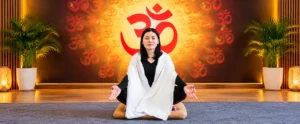

What is Breath Meditation?
Of all the objects available for meditation; breath is most accessible object because it is always with you.

Life is a Celebration: Discover Your Inner Strength
Life is a vast field of opportunity to prove yourself, pursue your passion, and express the beauty of nature through words, painting, or sculpture.

What Lies Beyond Death? | The Ultimate Freedom of Form
The understanding of death is the first step toward discovering what lies beyond death. Physical death only changes your form
Best Asanas for Constipation and Better Digestion
Regular asanas relieve constipation, improves digestive health, restores bowel function and improves the body’s natural elimination process.